New Site Redirect

Tuesday, September 24, 2013

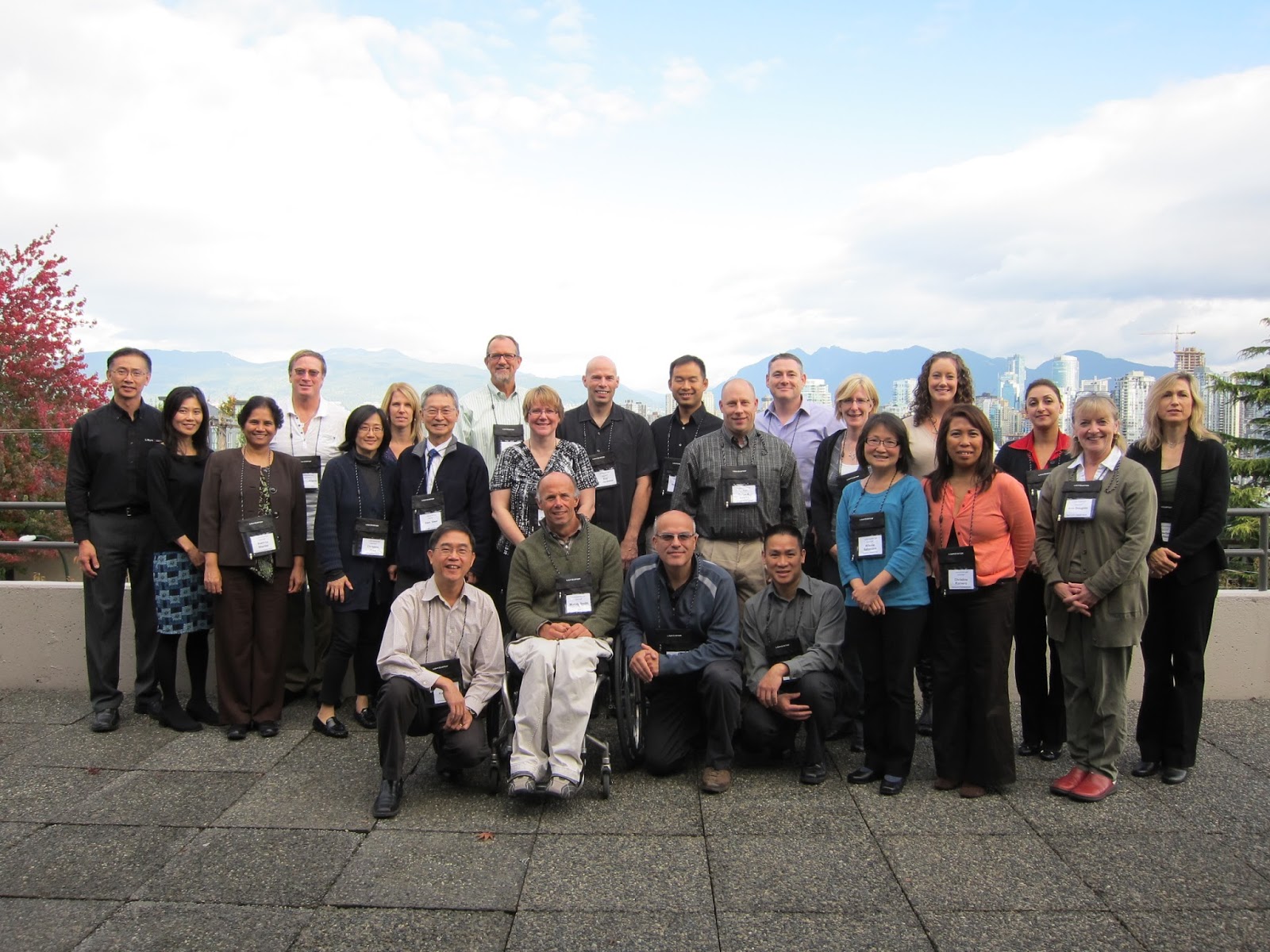
Welcome, Greenbelt Service Vancouver Participants!

This week marks the kick-off of the Greenbelt program for Service in Vancouver. More and more organizations are recognizing the value of applying Lean in service-based environments, and we truly enjoy providing a safe and engaging atmosphere of Lean learning. This is our third Greenbelt program to kick-off this September, and we still have two more to go! We are very excited to follow each group and share their experiences in the hopes that it will inspire others on their own respective Lean journey. For information on upcoming Greenbelt Winter programs beginning in January, please see our online calendar at http://www.leansensei.com/calendar. Registration is available online here.


Teamwork/Teambuilding activities aplenty:


Stay tuned for more updates!

Wednesday, September 18, 2013

Second Day of Blackbelt

Yesterday was the second day of Blackbelt. Starting today, the Blackbelts will kaizen!

The topic of the kaizen is Lean Strategy and Assessment. The kaizen will take place at a local Vancouver company. Stay tuned for the class created video of the module which will be posted on the blog and our Vimeo page.


Monday, September 16, 2013

Funny picture of the day

Lean Sensei founder David Chao dresses up as an astronaut as part of the Blackbelt program (there is always a surprise in Lean Sensei programs!). Jessie follows David with her own version of a Disco player to demonstrate that it's ok to have fun in the Blackbelt program.


Blackbelt Fall 2013 Kick-off


Fall Blackbelt challenge begins! 


Blackbelt program focuses on Lean Strategy and the Strategic Deployment of Lean methodology. Structured around the Lean Excellence (LE) model, the program covers Lean Strategy, Excellence in Product, Process, People and Customer as well as suppliers and external partners. This is an advanced level course that includes our well-renown Japan Lean Tour.  This eye-opening and insightful trip serves to be an invaluable experience for participants who are serious about encouraging and promoting a continuous improvement culture within their organizations.


Saturday, September 14, 2013

Vancouver Blackbelt launches Monday!


On Monday, we will be kicking-off our most important lean certification program, the Blackbelt program. Designed to develop world-class lean leaders, the Blackbelt offers 4 modules of intense, insightful projects. More importantly, the Blackbelt programs includes a complete benchmarking trip to Japan.

Please take a look at our overview video:

Thursday, September 12, 2013

Greenbelt Operations Vancouver Kick-off!

The weather may be getting cooler, but here at Lean Sensei we are just getting fired up! Fall programs have started up again at our head office in beautiful Vancouver. Participants from all over the United States and Canada are here for the first module of Greenbelt for Operations. For the bulk of this week they are applying their Lean skills at a hosting company conducting a Kaizen on the principles of 5S.

 
Without standardization, it is difficult to achieve even the most obvious of targets.


Keep an eye out for more updates with this group and for more from our other upcoming fall programs!
 Please check out the Lean Sensei Website for our program calendar and more information.

And here are the answers from the Greenbelt trivia questions posted on Monday. Thank you to all who posted their answers on our Facebook page.

Question (1)
How many books are in the “Toyota Way” series?

Five (The Toyota Way, The Toyota Way Field book, Toyota Talent and Toyota Culture, The Toyota Way to Lean Leadership)

Question (2) – Multiple Choice
Since 2004, how many people have graduated from Lean Sensei’s Greenbelt program?

a) 1,000
b) Between 1,000 and 1,250
c) Between 1,250 and 1,500 (the actual number is 1,305 and still counting- We are transforming the world!)
d) Between 1,500 and 2,000
  
Question (3) – Multiple Choice
In which year was the term “Lean” first coined?

a) 1987
b) 1990 (by Jim Womack in his book “The Machine that Changed the World”)
c) 1997
d) 1980
  
 Question (4)
In 2012, LSI started a quarterly newsletter, in which Andrew wrote our first ever Coach’s corner article on Flow. In this article he wrote that Flow could be broken down into four vital components. Name each of these.

1) Materials
2) Information
3) People
4) Spirit (or teamwork)
  
Question (5) – Multiple Choice
How many group kaizen’s have been completed through Lean Sensei’s Greenbelt program?

a) less than 150
b) 150 - 200
c) 200 - 250
d) greater than 250 (the actual answer is 276)

Question (6)
Name all 7 types of waste – Bonus point if you can name the 8th

1) Transportation / Travel
2) Unnecessary Inventory
3) Unnecessary Motion
4) Waiting
5) Over Production
6) Inappropriate Processing
7) Defects

8) TALENT! (or Skills)

Question (7) – Multiple Choice
As you know, the focus of these three days is on Lean Leadership. As leaders, this question is to see how well you know your Greenbelts. Amongst all LSI Greenbelts, what is the most common MBTI type?

a) INTP
b) ESTP
c) ESTJ
d) ISTJ (interestingly ISFJ is the dominant type in the overall population, meaning Greenbelts are more likely to be thinking than feeling vs. the general population)


Tuesday, September 10, 2013

For the first time Blackbelt in Winnipeg!

2013 marks the first year Lean Sensei with CME is offering Blackbelt in Winnipeg!

We hope you enjoy the photos from the first day.


The famous (and more challenging than it looks) Number Plate Game

Group Discussions

The Love the World song!

Group Photo!

Monday, September 9, 2013

How Much Do you Know About Greenbelt

Welcome to Greenbelt! -Sarah, Lean Sensei Greenbelt Coordinator

Everyone is back from summer vacation and it is time for our wave of Fall Lean Greenbelt certification courses. This Fall we will have two Greenbelt classes in Vancouver, one in Calgary (starting October 7) and one in Toronto (starting September 30). The first of the four pack begins today with Greenbelt Operations in Vancouver.

While our participants are learning about the philosophy and history of Lean today, let's test how much the rest of you know about our Greenbelt programs...

Question (1)

How many books are in the “Toyota Way” series?
Question (2) – Multiple Choice
 
Since 2004, how many people have graduated from Lean Sensei’s Greenbelt program?
a) 1,000
b) Between 1,000 and 1,250
c) Between 1,250 and 1,500
            d) Between 1,500 and 2,000

Question (3) – Multiple Choice
In which year was the term “Lean” first coined?
a) 1987
b) 1990
c) 1997
d) 1980

Question (4)
In 2012, Lean Sensei started a quarterly newsletter, in which Andrew wrote our first ever Coach’s Corner article on Flow. In this article he wrote that Flow could be broken down into four vital components. Name each of these.

Question (5) – Multiple Choice
How many group Kaizens have been completed through Lean Sensei’s Greenbelt program?

a) less than 150 
b) 150 - 200
c) 200 - 250
            d) greater than 250 
Question (6)
Name all 7 types of waste – Bonus point if you can name the 8th

Question (7) – Multiple Choice
Amongst all Lean Sensei Greenbelts, what is the most common MBTI type?

a) INTP
b) ESTP
c) ESTJ
d) ISTJ

Post your answers on our Facebook page, get them all right to win a prize!

Stay tuned for photos from today's Greenbelt program kick-off...

Saturday, September 7, 2013

Japan Lean Tour Trailer


Our Blackbelt program starts this coming Monday in Winnipeg Manitoba, followed by a launch in Vancouver, BC on September 16th.  We are extremely excited about this incredible program, which features our renowned Japan Lean Tour.

Take a look at our Japan Lean Tour trailer video!

Thursday, September 5, 2013

Tuesday, September 3, 2013

The Pain to Sustain


We’ve all heard it before. In fact, we’ve all probably asked it ourselves once too many times:

“Why is it so difficult to sustain the gains from the kaizen we completed only a couple months ago?!”

Well, the pain to sustaining is too often more than just disinterested, disengaged, and indifferent staff in the workplace. There are certainly many possible root causes contributing to unsuccessful attempts at sustaining gains from process improvement activities. Here are some of the main contributors to the abject failure to launch:

 
1.       Lack of simple and clear documentation of the new standard or best practice (which should be positioned at the point-of-use for easy access and reference)

2.       Lack of ownership of the process to ensure that the standard is kept alive

3.       Lack of follow-through training, coaching and audits by supervisors to ensure that the new way to doing things is clearly understood and carried out (it takes at least 20 days of constant reminder to change behavior after all)

 However, probably the biggest failure by companies wanting to gain long-term success implementing Lean initiatives is the lack of engagement by their staff in process improvements. Many studies have in fact been done on this and the reality is that in general only about 20% of change succeed when initiatives come from the top-down. This stands in stark contrast to an approximately 80% success factor when people affected are part of the solution to a problem and are engaged in driving the change effort!
 
In a recent in-house process-time reduction kaizen held at one of our clients, the process owners were given the opportunity to tell their story about the problems they faced and what they did to overcome these problems. 


Change-Over Team Report-out
Start-Up Team Report-Out

Office Team Report-out
 
The facility was shut down for a full 3 days to facilitate this kaizen event. By the end of the report-out, all the process owners sincerely thanked the business owner for the investment in time and resources and for giving them the opportunity to improve their respective process areas as one team shouting “All for One and One for All”.


Monday, September 2, 2013

Photo of the Day

Magnificent Dhalias bring back memories of summer...

Friday, August 30, 2013

Why, Why, Why, Why, Why


5 Whys and Root Cause Analysis


From Toyota Motor Corporation
“Underneath the “cause” of a problem, the real cause is hidden.  In every case, we must dig up the real cause by asking why, why, why, why, why.  Otherwise, countermeasures cannot be taken and problems will not be truly solved.”
Taiichi Ohno


As the great Sensei Taiichi Ohno teaches us, the “5 Whys” are there to help us look underneath the cause of a problem to find the “real cause” so that we can find solutions that will prevent the problem from happening again.
On the surface, using the “5 Whys” can sound like a pretty simple exercise – just ask 5 “Why?” questions and you will miraculously arrive at the “true root cause.”  However, anyone who has tried to use this technique seriously will concede that while very useful, properly performing a five-why analysis can be tough. 

And, although the five whys technique can work for both Operations-related problems and Service-related problems it is important to understand the strengths and limitations of this approach as well.  Think of it as a very important tool in your Lean Toolbox, but you’ve also got to remember to use the “right tool for the right job.” 

Here are 3 things that can help you improve your 5 Whys:

1.       Consider where the problem is happening and investigate possible factors that lead to the problem using a Fishbone Diagram.  A Fishbone diagram is a great tool to help you look at potential areas – by helping you to categorize and organize these factors in a way that will allow you to cover a lot of areas while avoiding repetition. There are a number of configurations that will allow you to divide up specific “cause categories” – here are 2 that are quite popular:

4M: Man, Machines, Materials, Methods
6P: People, Processes, Priorities, Programs, Products


2.       Gather facts and confirm them through Genchi Genbutsu.  For your root cause analysis to be robust, it is always important to verify your facts by going to the Gemba.  Observe the actual situation in the actual place that it occurs (by far the best way) and if you speak with people, use active listening to do your best to understand the content and to clarify whether you are hearing opinion or fact.  This is a good time to remember that it is always important to avoid the “5 Whos” – in other words, rather than blaming people, focus on the “Whys”. Don’t forget that more often than not a certain behavior that is out of standard may be due to reasons beyond what meets immediately meets the eye.


3.       Make sure you’ve found the root cause.  Often the question is “when will I know I have found the root cause? – is it automatically at the fifth “Why”? First of all, the number 5 is a rule of thumb – sometimes it may take less “whys”, maybe it will require more. The most important thing is to keep digging deeper, beyond the source of the problem.  One way to test whether you have found the root cause is to ask yourself, if I eliminate this, will it solve the original problem? 


Hint: We often utilize an image of a funnel – where each new “Why” question gets us closer to the end of the funnel spout.  If we find that asking “Why” one more time causes our “funnel” to widen out again, we are probably going beyond the root cause. 

 The 5 Whys is a systematic, logical approach to solving a problem by arriving at the true root cause – digging deep beyond the “symptoms” level to one where our countermeasure will eliminate the problem.  As with anything, arriving at the right depth requires that your analysis be sound. 
Always try your best to narrow down to one root cause BUT sometimes problems can be attributed to a correlation of multiple causes.  For example, a financial institution might have problems with certain products, bank atmosphere, services provided and so on.  In such an instance, it is important to identify the root causes to each of these multiple problems.  Never give up!

Thursday, August 29, 2013

New Icebreaker!

Those of you who have taken any of our Lean training courses know that ice breakers are quintessential to our dynamic facilitation style. Today, we introduced a new ice breaker, The Ping Pong Toss.

The Ping Pong Toss ice breaker debuted at an in-house kaizen for one of our American clients.


Ice Breaker using ping pong balls from Lean Sensei on Vimeo.


The materials are simple, large basket or bucket, 3 cups, 6-8 ping pong balls. You can improvise and add rings too.

If you get the ball into the bucket that's 1 point. A ball in a cup is 2 points.

 
Classroom training to equip the group for the kaizen.
 

The teams are delving into the data.


Wednesday, August 28, 2013

Lean at the Shoe Store

Previously, we have seen something like the photo below in Japan. However, this photo was taken in our very own Kelowna, BC!

Each size and the number of pairs remaining in each size are written on a simple white card attached to the shoe.

In this case 5, 6, 8 indicates that there is a single pair in each of those sizes remaining.

This is intuitive to the customer and to the staff. It is also an inexpensive way to manage customer expectations of available stock and if this is an item that will be reordered it acts similar to a kanban card as well.


Where have you seen Lean today?

Where can you implement a simple and quick solution to bring more value to your customers?

Thursday, August 22, 2013

Lean Omelette Chef

Lean can be applied anywhere!

We saw it during our corporate retreat at the omelet station. The photo below shows the Omelette Chef cooking over 6 customized omelets simultaneously, while keeping his ingredients fully stocked at all times.

 
Each pan gets moved down to the next burner as it enters each subsequent stage of cooking.
 
All the pitchers are pre-measured to the exact amount of his main omelet batter bowl where he pulls exactly one ladle full for each omelet. Despite each omelet moving and customers moving around too, this Lean Chef knew which omelet belonged to which customer- proof that his process was simple without any unnecessary steps that might cause complications.
 
The Lean chef added value to his hungry customers by entertaining with jokes. Perhaps we should hire him for the next Greenbelt breakfasts?


Bon appetite!


Wednesday, August 14, 2013

Photos of the day

Beautiful Vancouver photos taken by David Chao.


Tuesday, August 13, 2013

Greenbelt Vancouver First Day and Graduation: A Review Over the Past Year!

It has been over one year since we moved to our new head office in Fairview, and we are still in awe of our beautiful downtown and mountain view we are able to enjoy every day. Our local Vancouver Greenbelt programs consist of 80% hands-on application at various host companies throughout Metro Vancouver to solidify the 20% training time at our head office.

We thought would share the first and final day photos of Greenbelt classes that have graduated throughout our first year at our new office as we prepare for our last sessions of Greenbelt for 2013.

Greenbelt Operations begins: September 9, 2013
Greenbelt Service begins: September 23, 2013

For dates for Greenbelt in Calgary and Toronto or to register for a program, visit our website: http://leansensei.com


Greenbelt Operations Vancouver Summer 2012

First Day:


Graduation Day:


Greenbelt Service Vancouver Summer 2012

First Day:


Graduation Day:


Greenbelt Operations Vancouver Fall 2012

First Day:


Graduation Day:


Greenbelt Service Vancouver Fall 2012

First Day:


Graduation Day:


Greenbelt Operations Vancouver Winter 2013

First Day:


Graduation Day:

 
Greenbelt Service Vancouver Winter 2013

First Day:


Graduation Day:


Greenbelt Operations Vancouver Spring 2013

First Day:


Graduation Day:


Greenbelt Hybrid Vancouver Summer 2013

First Day:


Graduation Day: